
We grow up believing in justice. The good guys win. The truth comes out. The system works.
Then life happens. You read the news. You see things that don’t add up. You start wondering if justice is really as simple as they taught us in school.
Fiction has been asking these questions for centuries. Long before true crime podcasts and Netflix documentaries, novels were digging into the messy reality of how justice actually works. Not the ideal version. The real one.
The books on this list don’t have easy answers. They don’t wrap things up neatly with the villain caught and the innocent freed. Instead, they ask hard questions. What happens when the system is broken? What if the guilty person is also a victim? What if justice and revenge look exactly the same?
These stories will stay with you. They might even change how you see the world.
The Modern Classics
1. The Sentence by Christina Dalcher
This one starts with a nightmare scenario that feels terrifyingly possible.
Prosecutor Justine Boucher faces a impossible choice. New evidence emerges that could exonerate a man she sent to death row. But here’s the twist. In her world, lawyers pay the ultimate price for wrongful executions. If she admits she might have been wrong, her own life hangs in the balance .
The book opens with Justine sitting in a judge’s chambers, staring at a form that could seal her fate. Two words circle her mind: murder and certainty. She’s certain the defendant is guilty. But what if she’s wrong?
The law here isn’t abstract. It’s personal. Deadly personal.
Dalcher builds a world that echoes Kafka’s nightmares but feels completely modern. The question at its heart is one every thoughtful person has asked: how sure do you have to be to end someone’s life?
2. Next of Kin by Kia Abdullah
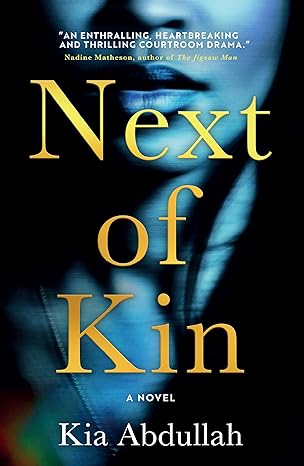
Kia Abdullah has earned the title “queen of courtroom drama” for good reason .
Leila Syed is a high-flying lawyer, stressed and stretched thin. In a moment of terrible distraction, she forgets her nephew Max in her car during a heatwave. The unthinkable happens.
What follows is a high-profile trial that tears her family apart. But as the case unfolds, hidden truths start emerging. Nothing is as simple as it first seemed.
Abdullah’s genius is in her realism. The dialogue feels real. The courtroom scenes feel real. The moral dilemmas feel painfully real. She doesn’t give you easy villains or obvious heroes. Just people making choices with consequences they couldn’t have imagined.
3. Notes On A Murder by B P Walter
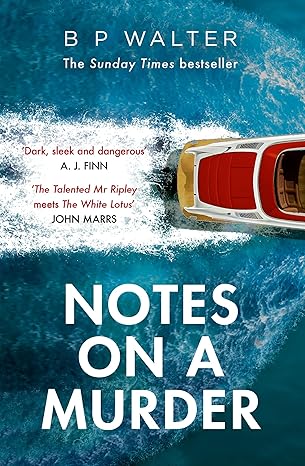
A luxurious villa. An elegant dinner party. Then everything goes wrong.
The host makes a sinister proposition. There’s a guest among them who’s committed terrible crimes. What if they could end that person’s life with no consequences? No legal system. No punishment. Just… justice.
This book navigates the thin line between morality and vigilantism. It asks the uncomfortable question: if you could kill a bad person and get away with it, would you? Should you?
Fans of Patricia Highsmith’s The Talented Mr Ripley will recognize the atmosphere here. Dark, suspenseful, morally complicated. Walter doesn’t judge his characters. He just puts them in impossible situations and watches what happens .
Historical Voices, Timeless Questions
4. Beat the Drum for Justice by Christopher C. Cross
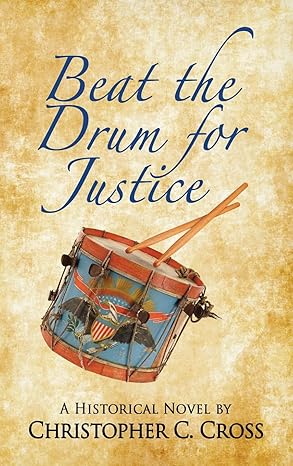
This one spans decades and covers some of the most important moments in American history.
Gabriel Adams grows up in 1850s Ohio, the son of an abolitionist preacher. Their home is a stop on the Underground Railroad. Even as a teenager, Gabe helps fugitive slaves escape to freedom, knowing it’s illegal even in a free state .
Through this work, he meets Jasmine, a young escaped slave whose family passes through the farm. They correspond over the years as Gabe studies law and becomes deeply involved in the abolitionist cause. He defends John Brown at trial. He fights for the Union during the Civil War. He marches with Sherman to the sea.
Along the way, he crosses paths with Frederick Douglass, Ulysses Grant, and Abraham Lincoln. After the war, he’s reunited with Jasmine. But the promises of emancipation prove temporary. Reconstruction gives way to Jim Crow.
Late in the novel, Gabe says something that echoes through history: “There was a righteous hope for healing with Reconstruction, but with Reconstruction dead, inequality and the Negro problem will continue for a long time” .
At nearly 600 pages, this is a commitment. But it’s worth it. Cross uses a lawyer’s perspective to examine injustice from every angle.
5. The Just and the Unjust by Vaughan Kester
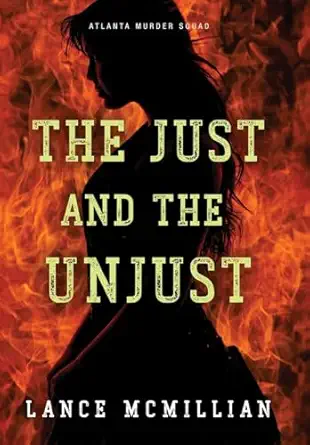
This one comes from a different era, but its questions are timeless.
Set in a small town, this legal drama unfolds within the confines of the courtroom. Right and wrong blur. Personal convictions clash with societal pressures. The pursuit of justice gets complicated by the people involved .
Kester wrote in the early 1900s, and his work has been preserved as culturally important. Scholars believe it deserves to stay in circulation because it speaks to something fundamental about how humans handle fairness and accountability.
The title says it all. Who are the just and who are the unjust? In real life, it’s rarely as clear as we’d like.
6. Law-Star for an Outlaw by W. C. Tuttle
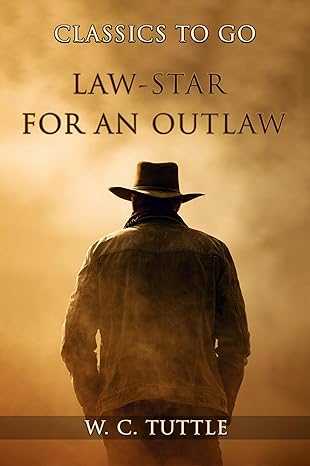
A Western that’s really about something bigger.
W. C. Tuttle transforms the frontier landscape into a theater of the human condition. His protagonist isn’t simply an outlaw or a lawman. He’s something in between, an emblem of the eternal paradox of moral existence .
Tuttle explores the tension between the law of the land and the law of the heart. Between justice as an external institution and justice as an inward illumination. His characters aren’t caricatures of good and evil. They’re living embodiments of moral ambiguity.
Every gun drawn and every silence held becomes a reflection of conscience, identity, and survival. The West, as Tuttle envisions it, becomes a mirror of human civilization itself, its promises, contradictions, and failures .
Global Perspectives on Justice
7. Impunity by Faith Osemudiamen Ebhodaghe
This Nigerian novel has sparked serious conversations about corruption, justice, and the price of ambition .
Aza Kio Briggs is fourteen years old when his life gets shaped by a system where power is wielded without consequence. From a brutal boarding school to the treacherous worlds of politics, crime, and secret societies, Aza’s rise to power is as compelling as it is chilling .
The story spans four decades, following Aza as he grows into one of the most dangerous men in the country. His sins multiply. But fate delivers a reckoning that threatens to unravel everything.
Early readers call it “a brutally honest, thought-provoking read” . Ebhodaghe blends suspense, politics, and supernatural elements to explore how a broken system breeds broken people, and how the consequences of unchecked power ripple across generations.
8. They Will Be in Heaven Before the Devil Knows by Amado D. Valdez
From the Philippines comes a legal thriller that asks what it means to fight for fairness in a world where justice can feel out of reach .
The novel opens explosively with an attack targeting the Chief Justice. From there, it becomes a high-stakes story where justice and injustice are locked in relentless struggle. Lawyers fight against corruption and abuse of power in the very institutions meant to uphold justice .
But beneath the legal battles lies a deeply human story about family, fatherhood, and the unbreakable ties among those who share the calling of the law. Real tensions between ambition and integrity, vengeance and forgiveness form the emotional backbone.
Valdez draws from hard realities faced by lawyers and ordinary citizens alike. The result dares readers to question, reflect, and act, not just as legal professionals but as citizens who believe justice must remain a living mission .
9. Justice In The By-Ways, A Tale Of Life by F. Colburn Adams
A gripping novel from the 1800s that explores crime, justice, and human nature.
Adams crafts a mystery that delves into the interplay between law and morality. Through intricate plot twists and compelling drama, he navigates the dark alleys of crime and the pursuit of justice .
What makes this book special is how Adams portrays the tensions between right and wrong. He sheds light on the multifaceted nature of justice and its impact on individuals and society. His characters make moral decisions in the face of adversity, and those decisions rarely feel simple.
For a book written so long ago, it feels remarkably relevant. Some questions never go away.
10. Queer Justice by Alex Charns
Set against the political tensions of 1960s Washington, this novel traces the cost of truth in a system engineered to suppress it .
It’s 1966. George Smith, a jailed Black teenager, claims he holds a secret capable of destroying a Supreme Court justice. His court-appointed lawyer, Mitch Pilsudski, gets drawn into a case that exposes the limits of the law itself. As Mitch searches for the truth, he discovers that justice is designed less to protect the vulnerable than to contain risk .
The FBI quietly tightens its grip on the High Court. Backroom negotiations, suppressed evidence, and moral compromise shape the fate of men positioned on opposite ends of power.
Charns grounds the novel in real historical material, drawing from FBI records and unresolved questions surrounding the Supreme Court in the 1960s. The courtroom scenes resist dramatic reversals. Their power lies in absence, no meaningful doubt, no intervention, no structural correction.
Looming quietly over every decision is the FBI, ever-present yet unseen, shaping outcomes through surveillance and coercion. Corruption here is not dramatic or reckless. It is administrative, carefully justified, brutally effective .
What These Books Teach Us About Justice
Reading these novels together, patterns emerge.
Justice is human. It’s made by people with biases, blind spots, and bad days. Systems don’t fail. People do.
Certainty is dangerous. The prosecutor who’s absolutely sure. The witness who’s completely confident. The jury that has no doubt. Certainty, not uncertainty, is what sends innocent people to prison.
Power protects itself. From the Supreme Court to small-town sheriffs, institutions close ranks. Justice for the powerful looks different than justice for everyone else.
Victims get forgotten. In the fight between prosecution and defense, between guilt and innocence, the people actually hurt can disappear. They deserve better.
There’s no satisfying ending. Real justice doesn’t wrap up neatly. These books don’t either. They leave you with questions, not answers.
thanks for this list