
BEFORE WE BEGIN:
If you’re in your twenties and you feel lost, confused, behind, or like everyone else got a rulebook you missed you’re not broken. You’re normal.
The twenties are strange. You’re supposed to be an adult, but you don’t feel like one. You’re making life-altering decisions with zero experience. You’re watching colleague get promotions, get married, get rich, while you’re still figuring out how to do laundry without shrinking everything.
This feeling? It has a name. It’s called being in your twenties.
The five books below won’t give you a 10-step plan to fix your life. They won’t tell you that you’re doing it wrong. Instead, they’ll do something better:
They’ll make you feel seen. They’ll give you language for what you’re experiencing. And they’ll remind you that every single person who looks like they have it together is also, somewhere deep down, figuring it out as they go.
1: THE ONE THAT EXPLAINS WHAT’S HAPPENING TO YOU
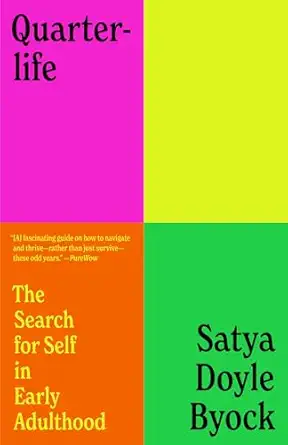
QUARTERLIFE: The Search for Self in Early Adulthood
Satya Doyle Byock
Published: 2022 · Pages: 240
WHAT THIS BOOK IS ABOUT
You know how we have books about adolescence? And books about midlife crises? But nothing about the decade where you’re supposed to “figure it out”?
Satya Doyle Byock, a psychotherapist who works exclusively with twentysomethings, noticed this gap. She realized that her clients including young people were all struggling with the same thing: a complete lack of roadmap for this stage of life.
Quarterlife is the roadmap she wished existed.
Through client stories and psychological research, Byock identifies two types of twentysomethings:
The Stable Ones: They have the job, the relationship, the apartment. On paper, they’re fine. Inside, they’re dying. They followed the rules and ended up empty.
The Unstable Ones: They’re wandering. Multiple jobs, multiple cities, multiple relationships. They’re searching for meaning but can’t find solid ground.
Most people are a mix of both. Most people feel like they’re failing at both.
The book walks you through the four pillars of quarterlife development:
- Separating from your family of origin
- Building your own identity
- Finding meaningful work
- Creating lasting relationships
WHY IT WILL HELP WHEN YOU’RE LOST
This book does one thing better than almost any other: it normalizes what you’re going through.
When you’re lost in your twenties, the worst part is the isolation. It feels like everyone else figured something out that you missed. Byock’s clients are so real, so relatable, so exactly like you, that you’ll feel less alone within the first chapter.
She also avoids two common traps:
- Toxic positivity (“Just manifest your dreams!”)
- Gloom (“Your twenties are meaningless, give up”)
Instead, she offers something rare: gentle, intelligent validation combined with actual psychological tools.
THREE THINGS YOU’LL LEARN
- The “Meaning Crisis” is real. Your generation was raised on “follow your passion” without being taught how to find it. This book helps you actually do the work.
- Stability and meaning are not the same thing. You can have a “perfect life” and still feel empty. The book helps you figure out which you’re actually lacking.
- You need both structure and soul. Too much structure and you feel trapped. Too much soul-searching and you never build anything. The book helps you find balance.
2: THE ONE THAT KICKS YOUR ASS (IN A GOOD WAY)
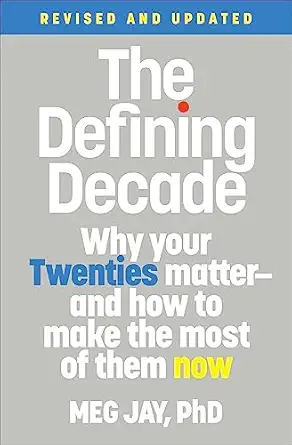
THE DEFINING DECADE
Meg Jay, PhD
Published: 2012 (Updated 2021) · Pages: 300
WHAT THIS BOOK IS ABOUT
Clinical psychologist Meg Jay was tired of watching twentysomethings drift through their most formative years because they’d been told “your twenties don’t matter” or “you have plenty of time.”
So she wrote the opposite book.
The Defining Decade is a wake-up call wrapped in warmth. Jay uses client stories to show how small decisions in your twenties compound into enormous differences by your thirties. Not to scare you—but to empower you.
The book is divided into three sections:
Work
- That “just for now” job? It’s shaping your future.
- Identity comes from what you do, not just what you think.
- Weak ties (acquaintances) are more valuable than close friends for opportunities.
Love
- You don’t “find yourself” and then find love. You find yourself through love.
- The cohabitation effect: moving in together for convenience often leads to “sliding” into marriage instead of choosing it.
- Your partner choices are life choices.
Body & Mind
- Your brain is still developing until 25. You’re literally not finished yet.
- The confidence to speak up comes from doing things, not waiting until you feel ready.
- Your twenties are the best time to build the person you want to be at 40.
WHY IT WILL HELP WHEN YOU’RE LOST
This book is for the lost person who’s tired of being lost.
If Quarterlife is the warm hug that says “you’re normal,” The Defining Decade is the friend who gently shakes you and says “okay, but let’s not waste this.”
Jay doesn’t shame you for being lost. But she also doesn’t let you use “being lost” as an excuse to do nothing. She presents a mountain of research showing that your twenties are the “sweet spot” for brain development, habit formation, and life trajectory.
The message: You have time, but you don’t have unlimited time. Start now.
THREE THINGS YOU’LL LEARN
- “Identity capital” is your most valuable asset. The skills, experiences, and relationships you build now are what you’ll trade on for decades. Don’t waste years in jobs that build nothing.
- The urban tribe myth. Young adults often prioritize friendship over romance, thinking they’ll find love later. But Jay shows that your twenties are when you build the foundation for lifelong partnership.
- You can’t think your way into a life. You have to live your way into it. Action comes before clarity, not after.
3: THE ONE THAT FEELS LIKE A FRIEND
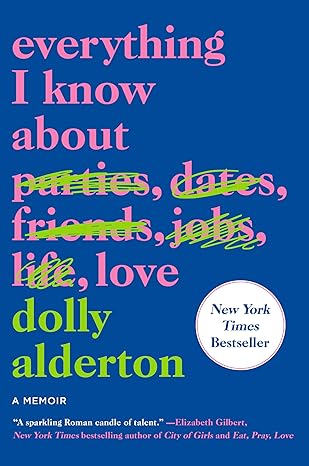
EVERYTHING I KNOW ABOUT LOVE
Dolly Alderton
Published: 2018 · Pages: 240
WHAT THIS BOOK IS ABOUT
Dolly Alderton was in her late twenties, single in London, watching friends get engaged while she collected bad date stories like badges of honor. She felt behind. She felt wrong. She felt like everyone else had unlocked the secret to adult life while she was still trying to find the door.
So she wrote it all down.
Everything I Know About Love is not a self-help book. It’s a memoir that functions as one. Alderton walks us through her twenties: the flat-shares, the terrible boyfriends, the hangovers, the career confusion, the jealousy when friends pair off, the terror of being alone.
And through it all, the through-line is friendship.
The book’s central argument (shown, not told) is that romantic love is not the only love that matters. The friends who hold your hair back, who show up with wine after a breakup, who grow alongside you—they’re the ones who actually save you.
WHY IT WILL HELP WHEN YOU’RE LOST
This book is medicine for a specific kind of lost: the kind where you’re comparing your insides to everyone else’s outsides.
Alderton is so brutally honest about her own failures, embarrassments, and confusions that you’ll feel deeply, profoundly normal. She’s not a therapist with advice. She’s a slightly older sister figure saying “I survived this, and you will too.”
Particularly powerful sections:
- The chapter on her eating disorder and body image struggles
- The list of things she learned from bad relationships
- The tribute to her female friends that will make you cry on public transportation
By the end, you won’t have a 5-year plan. But you’ll feel less alone. And sometimes that’s the whole point.
THREE THINGS YOU’LL LEARN
- Romantic love is not the only love story that matters. Your friendships are just as significant, just as formative, just as worthy of celebration.
- Everyone is faking it. The people who seem to have perfect lives? They’re struggling too. You’re just not inside their heads.
- You will survive your own heartbreak. It feels like you won’t. You will.
4: THE ONE THAT REMINDS YOU ABOUT MAGIC
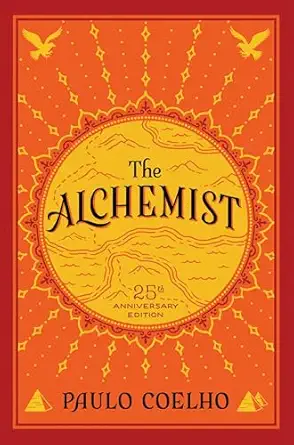
THE ALCHEMIST
Paulo Coelho
Published: 1988 · Pages: 208
WHAT THIS BOOK IS ABOUT
If you haven’t read The Alchemist yet, you’ve definitely heard about it. It’s one of the best-selling books in history, translated into 80+ languages. And for good reason.
The story is simple: Santiago, a young shepherd, has a recurring dream about treasure near the pyramids. He sells his sheep, crosses continents, gets robbed, falls in love, and eventually learns that the journey matters more than the destination.
But the book’s power isn’t in the plot. It’s in the philosophy woven through every page:
“When you want something, all the universe conspires in helping you to achieve it.”
This isn’t a how-to book. It’s a why-to book. It’s about remembering that life has meaning, that your desires are signals, and that the path unfolds as you walk it.
WHY IT WILL HELP WHEN YOU’RE LOST
When you’re lost in your twenties, you’ve usually lost two things:
- A sense of direction
- A sense of meaning
The Alchemist addresses the second one.
While practical books help you build a resume and find a partner, this book helps you remember why any of it matters. It’s spiritual without being religious. It’s hopeful without being naive.
Lost twentysomethings often feel like they’re wandering aimlessly. This book reframes wandering as the path. You’re not lost. You’re on a journey. The treasure is ahead, but the lessons are now.
THREE THINGS YOU’LL LEARN
- Fear of failure is the biggest obstacle. Most people give up on their dreams because they’re afraid of losing what they already have.
- The journey is the point. Santiago could have stayed home. But he would have missed everything that made him who he became.
- Listen to your heart. It sounds cheesy, but the book argues that your heart knows things your brain doesn’t.
5: THE ONE THAT HEALS REGRET
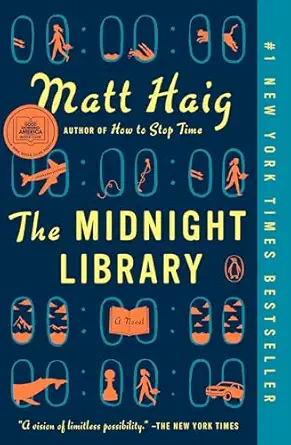
THE MIDNIGHT LIBRARY
Matt Haig
Published: 2020 · Pages: 304
WHAT THIS BOOK IS ABOUT
Nora Seed is 35, not 20-something. But hear me out, this book belongs on this list.
Nora is so lost, so filled with regret, so convinced she’s failed at life that she decides to end it. Instead of dying, she wakes up in the Midnight Library a liminal space between life and death, filled with books representing every possible life she could have lived.
Each book lets her try a different version of herself: the Olympic swimmer Nora, the rock star Nora, the wife and mother Nora, the glaciologist Nora. She gets to sample all the lives she regrets not choosing.
And slowly, she learns something profound: every life has pain. Every path has regret. The goal isn’t to find the perfect life it’s to want the one you have.
WHY IT WILL HELP WHEN YOU’RE LOST
Twentysomethings are drowning in “what if.”
What if I’d chosen a different major? What if I’d stayed with that person? What if I’d moved to that city? What if I’d taken that job?
These questions can paralyze you. They make you feel like you’ve already made irreversible mistakes at 25.
The Midnight Library is a thought experiment that walks you through every “what if” and shows you: the other side isn’t greener. It’s just different.
This book heals regret. Not by telling you to stop regretting, but by showing you, imaginatively, that the life you’re living is the only one that could have led you here. And “here” is more precious than you realize.
THREE THINGS YOU’LL LEARN
- Regret is a trap. You can spend your whole life wishing you’d made different choices. But you made those choices for reasons that made sense at the time.
- No life is pain-free. The fantasy versions of your life don’t include the problems those versions would have. Every path has its own suffering.
- Wanting to be alive is enough. You don’t need a grand purpose. Sometimes just choosing to live, to stay, to try that’s everything.
Conclusion
Being lost in your twenties is not a bug. It’s a feature.
This decade is designed to be disorienting because you’re doing something unprecedented: building a life from scratch. No blueprint. No instruction manual. Just you, your intuition, and the examples of people who came before (most of whom were also making it up as they went).
The five books above won’t give you a GPS. But they’ll give you something better:
They’ll give you company on the road.
And they’ll remind you that every single person who looks like they know where they’re going has, at some point, been exactly where you are lost, scared, and hoping the next turn leads somewhere good.
It does. Keep going.
THE ULTIMATE “LOST IN YOUR 20s” BUNDLE
Get all 5 books on Amazon or Audiobooks and listen while you commute, clean, or cry in your car (no judgment).
Free trial includes 3 audiobooks. Cancel anytime.