
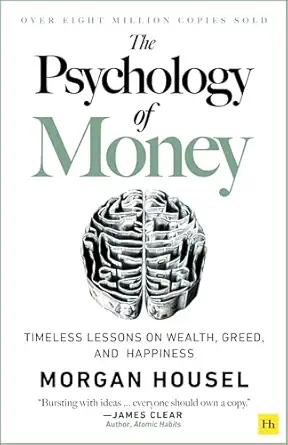
10 Lessons That Changed How I Think About Wealth
I read a lot of books about money. Most of them are boring. They tell you to budget better, invest smarter, cut your coffee spending. Good advice, sure. But nothing that sticks.
Then I read The Psychology of Money by Morgan Housel, and everything felt different.
Not because the advice was revolutionary. It wasn't. Housel doesn't have a secret formula or a get-rich-quick scheme. He just understands something most money books miss. That money isn't about math. It's about behavior. It's about psychology. It's about the stories we tell ourselves.
The book stayed with me in ways other finance books never have. I think about its lessons all the time. When I'm stressed about money. When I'm watching the market. When I'm comparing myself to people who have more.
Here's what I learned.
1. No One Is Crazy
This is the first line of the book, and it stopped me cold.
"We all make decisions based on our own unique experiences that seem reasonable to us."
Housel tells a story about two people. One grew up during the high-inflation 1970s. The other grew up during the booming 1990s. They'll have completely different views on investing. Not because one is smarter. Because their experiences shaped them differently.
This explained so much about my own money habits.
I grew up in a family that never had much. Money was scarce. Every purchase was a decision. That shaped me into someone who saves aggressively, who feels anxious spending, who checks bank accounts obsessively. My wife grew up differently. Money wasn't discussed. There was always enough. She spends more freely, saves less anxiously.
For years, I thought she was reckless. She probably thought I was paranoid.
Housel helped me see we're both responding to our stories. Neither of us is crazy. We're just shaped by different pasts.
2. Luck and Risk Are Brothers
This one hit hard.
Housel points out that Bill Gates went to one of the only high schools in the world with a computer club. In 1968. That's luck. His friend Kent Evans, who was just as smart and driven, died in a climbing accident before they could start Microsoft together. That's risk.
We love to attribute success to skill and failure to bad luck. But it's never that simple.
Every successful person got some luck. Every failed person encountered some risk. The line between them is thinner than we think.
I have a friend who started a business right before the pandemic. It failed. He blames himself. But honestly? Timing was brutal. Another friend started the same business a year later and thrived. Same skills. Same effort. Different luck.
Housel says we should judge decisions, not outcomes. A good decision can lead to a bad outcome because of risk. A bad decision can lead to a good outcome because of luck. The outcome doesn't tell you everything.
3. Enough Is a Powerful Word
This chapter wrecked me.
Housel tells the story of a hedge fund manager who was already wealthy beyond imagination. Hundreds of millions. More than anyone could spend. But he wasn't satisfied. He took more risk, chasing more money. Then everything collapsed. He lost almost everything.
Why? Because he didn't know what enough looked like.
Housel writes: "The hardest financial skill is getting the goalpost to stop moving."
I felt this in my bones.
For years, I kept moving my goalposts. When I made X, I thought I'd be happy. Then I made X and wanted Y. Then Y and wanted Z. There was never enough because I never defined enough.
Housel helped me see that chasing more without knowing why is a trap. At some point, you have to say "this is enough." Not because you can't get more. Because the price of more might be everything.
4. Compounding Needs Time
Everyone knows compound interest is powerful. But Housel made me understand it differently.
He uses Warren Buffett as an example. Buffett's investing skill is amazing. But here's the thing. He started investing at ten. He's been compounding for over eighty years. If he'd started in his thirties and retired in his sixties, he'd have a fraction of his wealth. The skill matters. But the time matters more.
Housel writes: "The most powerful and important book should be called The Shrinking Puppy. Because when you buy a puppy and it grows into a huge dog, it's not surprising. You watched it happen step by step."
We want results fast. We want to get rich quick. But real wealth is boring. It's slow. It happens over decades, not days.
This changed how I think about investing. I used to check my accounts constantly, anxious about short-term movements. Now I care less about this month or this year. I care about decades. Because that's where compounding happens.
5. Getting Wealthy vs. Staying Wealthy
This distinction changed everything for me.
Getting wealthy takes risk, optimism, willingness to bet on yourself. Staying wealthy takes something completely different. It takes fear, humility, willingness to survive at all costs.
Housel says: "There are a million ways to get wealthy. There's only one way to stay wealthy: a combination of frugality and paranoia."
He tells the story of many people who got rich and then lost everything. They made one mistake. They thought the same skills that made them rich would keep them rich. But staying rich requires different skills.
This made me think about my own life. Not just money. Career. Relationships. Health. The things that got me somewhere aren't the same things that keep me there. I need different tools for different stages.
6. Tail Events Drive Everything
Housel points out that a small number of things drive most results.
In investing, a handful of stocks drive the entire market. In business, a few products make all the money. In life, a few decisions shape everything.
He writes: "You can be wrong half the time and still do incredibly well."
This freed me.
I used to think I had to be right about everything. Every investment. Every decision. Every choice. If something went wrong, I'd obsess over it.
But Housel showed me that great investors are wrong all the time. They just make sure their right decisions are big enough to outweigh all the wrong ones.
In my own life, a few good decisions have made all the difference. Choosing my spouse. Staying in a career path even when it was hard. Buying a house when I wasn't sure I was ready. Those few things matter more than all the small mistakes combined.
7. Freedom Is the Goal
Housel asks a simple question: What do you actually want from money?
Not the stuff. Not the status. Not the numbers in an account. What do you really want?
His answer: control over your time.
"The ability to do what you want, when you want, with who you want, for as long as you want, pays the highest dividend that exists in finance."
This reframed everything for me.
I used to think about money as a score. A way to measure success. A way to keep up with people who had more.
Now I think about money as freedom. The freedom to walk away from a job I don't love. The freedom to spend time with people I care about. The freedom to say no to things that don't serve me.
That changes how I spend. It changes how I save. It changes what I consider enough.
8. Save Without a Reason
Housel says something counterintuitive.
Save money even if you don't know what for. Just save.
Most personal finance advice says save for specific goals. Retirement. House. Education. But Housel argues for saving just because. For the flexibility. For the options. For the ability to survive the unexpected.
He writes: "The only way to be wealthy is to not spend the money that you have. It's that simple."
This hit me because I'm a natural saver. I've always felt slightly guilty about it. Like I should be spending more, enjoying more, living more.
Housel helped me see that saving isn't deprivation. It's freedom stored up for later. It's options I don't even know I'll need yet.
9. Reasonable vs. Rational
This distinction is brilliant.
In finance, rational means doing what math says is optimal. But humans aren't rational. We're emotional. We're scared. We're hopeful. We do things that don't make mathematical sense.
Housel argues that being reasonable is better than being rational.
Reasonable means you can sleep at night. Reasonable means you won't panic and sell everything during a crash. Reasonable means you can stick with a plan even if it's not mathematically perfect.
I've made some financial decisions that weren't mathematically optimal. Paying off my mortgage early instead of investing. Keeping more cash than I "should." These choices don't maximize returns. But they let me sleep.
Housel says that's okay. The best plan is the one you can stick with.
10. The Seduction of Pessimism
Why does bad news sell better than good news?
Housel explains that pessimism sounds smarter. It feels more sophisticated to predict disaster than to say things will probably be fine. Also, we notice threats more than opportunities because survival depends on it.
But history shows that things generally get better. Over time, we make progress. The world improves. The doomsayers are almost always wrong.
This doesn't mean ignoring risks. It means keeping perspective.
When markets drop, when news is scary, when everyone predicts disaster, Housel reminds us that pessimism is seductive but often wrong. The long arc bends toward growth.
How This Book Changed Me
I can trace specific changes in my life back to this book.
I stopped checking my investments constantly. I used to look every day, sometimes multiple times. Now I check once a month. Maybe. The short-term doesn't matter. The long-term does.
I defined what enough looks like. Not a number. A feeling. Enough is having options. Enough is not worrying about unexpected expenses. Enough is freedom.
I started leaving more room for error. More cash. More flexible plans. More margin. I sleep better.
I stopped comparing myself to others. Their journey is different. Their luck is different. Their risk is different. My only competition is my own goals.
I started saving just because. Not for anything specific. Just for the options it creates.
I became more patient with my money. And with myself.
My Favorite Quotes
Here are the lines I come back to again and again:
" The hardest financial skill is getting the goalpost to stop moving."
" The ability to do what you want, when you want, with who you want, for as long as you want, pays the highest dividend that exists in finance."
" The only way to be wealthy is to not spend the money that you have. It's that simple."
" You can be wrong half the time and still do incredibly well."
" The most important part of every plan is planning on your plan not going according to plan."
" Nothing is as good or as bad as it seems."
" The volatility/uncertainty we fear is the price of admission. It's not a fine. It's a fee."
Get your copy today:
Buy on Amazon | Get the Audiobook on Audible | Check your Library on Libby