
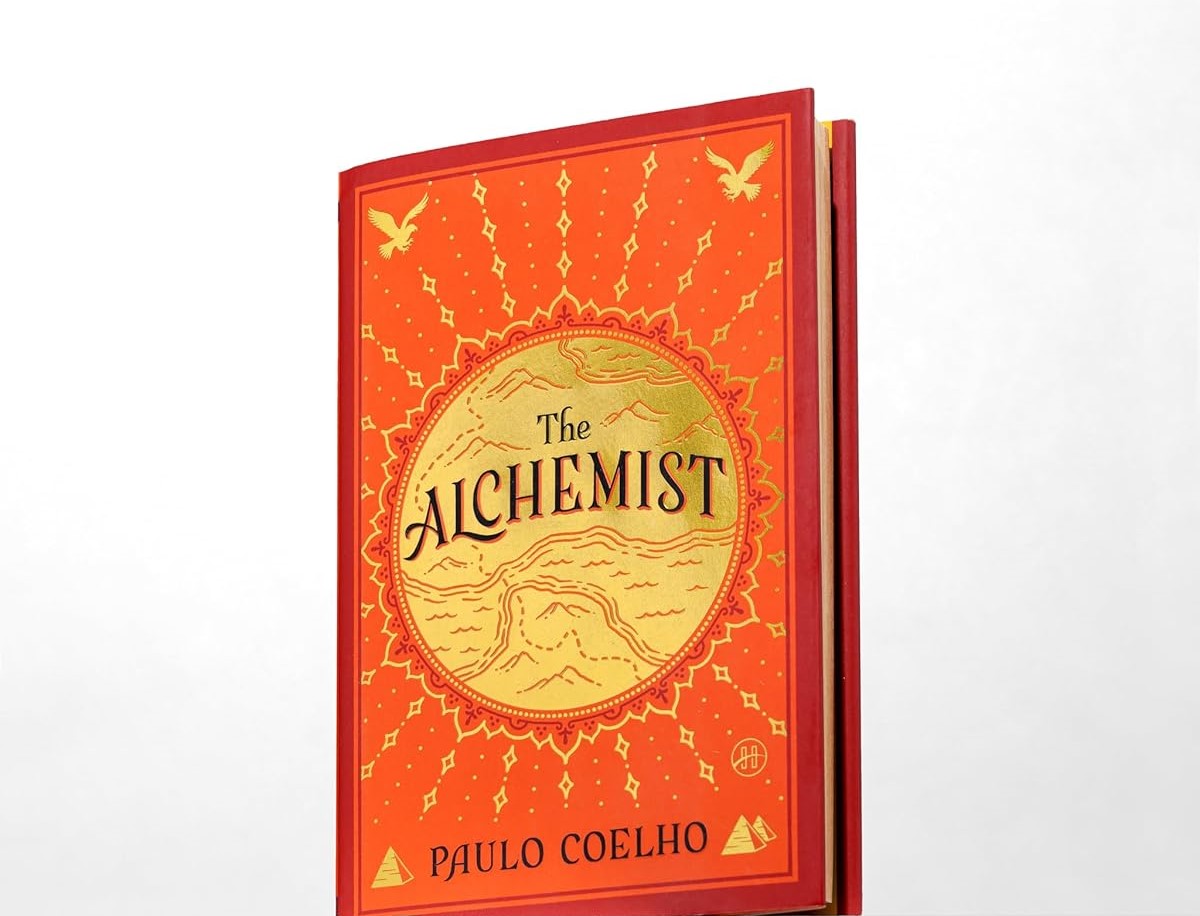
What a Simple Story Taught Me About Life, Dreams, and Following My Heart
I first read The Alchemist when I was nineteen. I didn't get it.
I mean, I understood the story. A shepherd boy travels from Spain to Egypt looking for treasure, has adventures along the way, and learns some lessons. Fine. Nice story. I moved on.
Then I read it again at twenty-five. And something shifted.
By thirty, I'd read it three more times. Each time, different parts spoke to me. Different lessons landed. The book grew as I grew.
That's the thing about The Alchemist. It seems simple. A fable, really. But it contains truths that reveal themselves slowly, over years, as you live your life and make your own journey.
Paulo Coelho has said he wrote the book in two weeks, feeling like the story was already there, waiting to be channeled. Maybe that's why it feels ancient and timeless. Like something you've always known but never quite articulated.
Here are the lessons that have stayed with me.
Lesson 1: When You Want Something, All the Universe Conspires to Help You Achieve It
This is the most famous line from the book, and it's easy to dismiss as wishful thinking. But Coelho isn't saying the universe will hand you what you want. He's saying something more subtle.
When you truly commit to something, the world responds. Opportunities appear. People show up. Coincidences happen. You notice things you would have missed.
I've seen this in my own life. The times I've been most focused, most clear about what I wanted, things seemed to align. Not magically, exactly. But as if my attention had tuned me into a frequency I couldn't hear before.
Coelho writes: "When you want something, all the universe conspires in helping you to achieve it."
The key word is conspires. It's not a guarantee. It's an invitation. Pay attention. The universe is talking. Are you listening?
Lesson 2: The Secret of Life Is to Fall Seven Times and Get Up Eight
Santiago, the shepherd boy, gets robbed within the first few days of his journey. He's in a strange country, no money, no way home. He sits in the marketplace and cries.
Most of us would give up. Go home. Say "well, that didn't work."
But Santiago doesn't. He gets a job. Works for a year. Saves money. Learns the language. Then continues his journey.
Coelho writes: "The secret of life, though, is to fall seven times and to get up eight times."
This isn't about blind optimism. It's about commitment. If you really want something, setbacks are just part of the process. You don't quit because things got hard. You adjust, learn, and keep going.
The difference between people who achieve their dreams and people who don't isn't talent or luck. It's persistence. The willingness to get up one more time than you fall.
Lesson 3: People Are Capable, at Any Time in Their Lives, of Doing What They Dream Of
This one hit me hard the first time I really heard it.
We tell ourselves stories about timing. I'm too young. I'm too old. I don't have enough experience. I have too many responsibilities. Later. Someday. When the time is right.
Coelho says that's all lies.
Santiago is a shepherd. He could have stayed a shepherd. Safe. Comfortable. Known. Instead, he sells his sheep and crosses an ocean to follow a dream.
The crystal merchant has dreamed of visiting Mecca his whole life. But he's afraid that if he goes, he'll have nothing to live for. He'd rather have the dream than fulfill it.
Coelho doesn't judge him. He just shows him. And in that showing, asks us: which one are you? The one who goes? Or the one who holds the dream at a distance because it's safer?
"People are capable, at any time in their lives, of doing what they dream of."
The only question is whether you will.
Lesson 4: Tell Your Heart That the Fear of Suffering Is Worse Than the Suffering Itself
This is the advice the alchemist gives Santiago when he's afraid.
Fear is the thing that stops most of us. Not the actual obstacles. The imagined ones. The disasters we invent in our minds. The rejection we haven't experienced yet. The pain that might never come.
Coelho writes: "Tell your heart that the fear of suffering is worse than the suffering itself. And that no heart has ever suffered when it goes in search of its dreams."
I think about this when I'm scared to do something. Send the email. Make the call. Start the project. Have the conversation. The anticipation is always worse than the reality. Always.
The suffering we imagine is almost never as bad as the actual thing. And the actual thing, even when it hurts, comes with growth. Comes with learning. Comes with becoming someone who faced their fear and survived.
Lesson 5: When You Possess Great Treasures Within You, and Try to Tell Others of Them, Seldom Are You Believed
This one is lonely but true.
When you're on a path, when you're following your dream, most people won't understand. They'll tell you you're being unrealistic. They'll warn you about all the things that could go wrong. They'll share stories of people who tried and failed.
Not because they're cruel. Because they're scared. Your courage reminds them of their own fear. Your faith in your dream highlights their doubts about theirs.
Santiago meets people along his journey who understand. The king. The crystal merchant. The Englishman. The alchemist. But most people don't.
You have to be okay with that. You have to hold your vision even when no one else sees it. Especially when no one else sees it.
Coelho doesn't offer comfort here. Just truth. This is how it is. Are you still going?
Lesson 6: The Closest Thing to a Dream Come True Is the Journey Itself
Santiago spends months traveling. Gets robbed. Works. Learns. Crosses deserts. Faces danger. Falls in love. By the time he reaches the pyramids, he's a different person than the shepherd who left Spain.
Then he discovers the treasure isn't there. It's back where he started. Under the tree where he first dreamed.
Some readers find this frustrating. All that journey for nothing?
But that's the point. The treasure wasn't the gold. The treasure was everything that happened along the way. The people he met. The lessons he learned. The person he became.
Coelho writes: "The journey is the thing."
I think about this when I'm focused on goals. Getting the job. Reaching the milestone. Achieving the thing. Those moments are satisfying, briefly. But the real living happens in between. The daily work. The small victories. The struggles and growth.
The destination is just an excuse for the journey.
Lesson 7: Love Is Not About Finding the Perfect Person. It's About Finding Someone Who Encourages You to Follow Your Dreams
Santiago meets Fatima at an oasis in the desert. He falls in love instantly. Then he has to leave to continue his journey.
Fatima doesn't try to stop him. She doesn't ask him to stay. She tells him to go. Because she knows that if he stays for her, he'll eventually resent her. Their love will be built on sacrifice, not choice.
She says: "If I am really a part of your dream, you'll come back."
This is real love. Not possession. Not need. Support. Encouragement. Faith that the person you love will return to you because they choose to, not because they have to.
Coelho isn't saying love should be easy. He's saying it should be freeing. The people who truly love you want you to become who you're meant to be, even if that means leaving for a while.
Lesson 8: You Can't Always See What's Right in Front of You
Santiago spends his whole journey looking for treasure at the pyramids. It never occurs to him that it might be back home.
How many of us do the same thing? Chase something we think is somewhere else, never realizing it was always here. Happiness. Peace. Fulfillment. We think they're in the next job, the next relationship, the next city. But maybe they're already here, waiting to be noticed.
The alchemist tells Santiago: "Where your treasure is, there also will be your heart."
The journey outward is really a journey inward. You travel to find yourself. And when you finally arrive, you realize you've been here all along.
How These Lessons Apply to Real Life
I've tested these lessons against my own experience. Here's what I've found.
On dreams: The things I've truly wanted, the ones I've been willing to sacrifice for, those have happened. Not always in the way I expected. But they've happened. The things I've only half-wanted, the ones I've pursued with one foot on the brake, those have slipped away.
On fear: Almost everything I've been afraid of has either never happened or been less terrible than I imagined. The anticipation is the worst part. The doing is just doing.
On persistence: Every meaningful achievement in my life has required multiple attempts. I've failed, learned, tried again. The people who succeed aren't the ones who never fail. They're the ones who keep going.
On love: The people who have supported my dreams, even when it was inconvenient for them, those are the relationships that have lasted. The ones who asked me to shrink, to stay small, to be safe, those didn't work.
On the present: When I'm fully in whatever I'm doing, I'm happier. When I'm somewhere else, worrying or planning, I'm miserable. The present moment is all I ever have.
Your Turn
Have you read The Alchemist? What lessons stayed with you? Drop a comment and let me know.
I'm always curious what different people take away from this book.
Get your copy of The Alchemist:
Buy on Amazon | Get the Audiobook on Audible | Check your Library on Libby
This book came into my life at the right moment. I was afraid to take risks, but after reading it I realized that sometimes you have to trust the journey and see where it leads.
I remember reading this book during a time when I felt stuck in life. The story reminded me that everyone has their own path and that it’s never too late to start following it.
This book made me realize that the journey is just as important as the destination.
Such a timeless story
What I enjoyed most about this book is how it encourages people to believe in themselves. It reminded me that sometimes the answers we’re searching for are already within us.
I finished the book feeling more hopeful about my future
Every time I read it, I learn something new.
I read this book during a tough period and it gave me a new perspective.
One of the most inspiring books I’ve ever read