

You have the ambition. You have the drive. You have the idea that keeps you up at night because you can’t stop thinking about it.
But something’s missing.
The experience. The wisdom. The knowledge of what actually works and what’s just a waste of time.
Here’s the good news. You don’t have to learn everything through trial and error. Some of the world’s most successful entrepreneurs have already made the mistakes, learned the lessons, and written them down for you.
The books on this list aren’t theoretical. They’re practical. They’ve been tested in real businesses, by real people, often starting with nothing but a bold idea. They cover everything from mindset and money to leadership and resilience.
Whether you’re still dreaming of your first venture or already running a growing business, these books will give you the tools and confidence to take the next step.
Why Reading Matters for Young Entrepreneurs
Entrepreneurship is a lonely journey. There’s no manual for what you’re doing. Every day brings new problems you’ve never faced before.
But you don’t have to figure it all out alone.
Books give you access to mentors you’d never meet otherwise . The founder who built a billion-dollar company from their basement. The investor who’s seen thousands of startups succeed and fail. The psychologist who understands how your own brain might be sabotaging you.
Reading won’t do the work for you. But it will help you work smarter. It will help you avoid mistakes others have already made. And when things get hard, it will remind you that you’re not the first person to struggle, and you won’t be the last to succeed.
The books below are organized by what they’ll teach you. Pick the area you need most, or work through the whole list.
1. Atomic Habits by James Clear
Best for: Building daily discipline and consistency
Success in entrepreneurship rarely comes from one big breakthrough. It comes from small, consistent actions repeated day after day.
James Clear’s Atomic Habits provides a practical guide to building positive routines and eliminating unproductive behaviors . He explains how tiny improvements, just 1% better each day, lead to remarkable long-term results.
The book’s actionable strategies make it highly relevant for entrepreneurs who need to manage time effectively, stay consistent, and maintain progress in their ventures . Instead of feeling overwhelmed by the big picture, Clear teaches you to focus on the small habits that make everything else possible.
One of his key ideas is that you don’t need to change your entire life. You just need to improve your systems. Better systems lead to better results.
2. Start with Why by Simon Sinek
Best for: Finding your purpose and communicating it clearly
Why do some organizations succeed while others fail? According to Simon Sinek, the answer lies in understanding purpose.
Sinek’s Start with Why focuses on the importance of having a clear sense of “why” you do what you do . People and customers are more likely to connect with a business that communicates its purpose effectively. This applies not only to marketing but also to leadership and team-building.
For young entrepreneurs, understanding your purpose can provide direction and motivation . It helps you build a business that’s not just profitable but also meaningful. When things get hard, your “why” keeps you going.
3. The 7 Habits of Highly Effective People by Stephen R. Covey
Best for: Foundational personal effectiveness
With over 40 million copies sold worldwide, this is one of the most influential books on personal effectiveness ever written .
Covey’s step-by-step pathway presents seven habits grounded in principles that apply to both professional and personal challenges. The habits include being proactive, beginning with the end in mind, and seeking first to understand before being understood.
The most transformational lesson? Lasting change starts with small, consistent actions. You don’t need to overhaul your entire life overnight. You just need to make one small change today, and another tomorrow.
4. The Lean Startup by Eric Ries
Best for: Testing ideas quickly and avoiding waste
Starting a business without understanding what customers truly want is one of the biggest risks any entrepreneur faces .
Eric Ries introduces a systematic approach to building businesses through continuous learning and experimentation . Instead of spending months or years perfecting a product, he encourages entrepreneurs to launch early versions, gather feedback, and make improvements based on real data from real customers.
This approach helps you reduce risk, save resources, and increase your chances of success. For young entrepreneurs with limited capital, it’s invaluable. You don’t need a million dollars to test your idea. You just need a way to get it in front of real people and listen to what they say.
Key concepts include the “Build-Measure-Learn” feedback loop and the Minimum Viable Product (MVP).
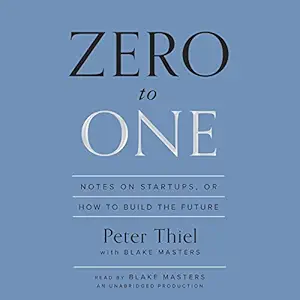
5. Zero to One by Peter Thiel
Best for: Thinking about innovation and creating something truly new
In Zero to One, entrepreneur and investor Peter Thiel explores what it takes to build truly innovative companies . The book focuses on creating something unique rather than competing in crowded existing markets.
Thiel argues that successful businesses are built by developing ideas that solve problems in ways no one else has considered . The next big company won’t be a copy of what already exists. It will be something entirely new.
For young entrepreneurs, this book challenges you to think boldly and aim for breakthroughs rather than incremental improvements . It’s not about doing things better. It’s about doing things differently.
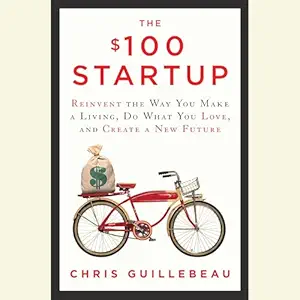
6. The $100 Startup by Chris Guillebeau
Best for: Starting a business with almost no money
Not every business requires large investments to succeed.
The $100 Startup highlights real stories of individuals who built successful businesses with minimal resources . Chris Guillebeau emphasizes the importance of starting small, focusing on value creation, and turning skills or passions into income-generating opportunities.
The message is liberating. You don’t need investors. You don’t need a fancy office. You don’t need years of experience. You just need an idea and the willingness to start.
For young entrepreneurs with limited capital, this book offers practical inspiration and realistic strategies. If you have a skill someone will pay for, you have a business.
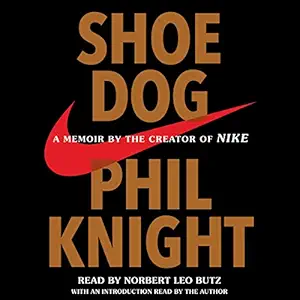
Bonus: Shoe Dog by Phil Knight
Best for: Understanding what the entrepreneurial journey actually looks like
Business is often presented as a clear path to success. Shoe Dog offers a different, more honest perspective .
In this memoir, Nike founder Phil Knight shares the story of building his company from a small startup into a global brand. What stands out is not just the outcome but the process. The uncertainty. The setbacks. The moments where success felt far from guaranteed.
Knight’s account is honest and reflective, showing that progress is rarely straightforward . It involves risk, persistence, and the willingness to continue even when outcomes are unclear. One of Bill Gates’ favorite books, it’s cited as offering one of the most honest paths to success ever written .
For young entrepreneurs, this provides an important balance to more theoretical business books. Behind every successful company is a series of decisions made in uncertain conditions, often by people who had no idea what they were doing.
How to Read These Books as a Busy Entrepreneur
Start with audiobooks. If you’re always on the go, listen during your commute, while working out, or while doing chores. Many of these are available on Audible .
Take notes. Don’t just read. Highlight, underline, write in the margins. The act of writing helps you remember.
Apply one idea at a time. You don’t need to change everything at once. Pick one concept from each book and try it for a week.
Re-read the best ones. The books that change your life aren’t the ones you read once. They’re the ones you return to.
Talk about what you’re learning. Sharing insights with a co-founder, mentor, or peer reinforces the lesson and generates new ideas.
Final Thoughts
The journey of entrepreneurship is hard. You will fail. You will doubt yourself. You will face problems you don’t know how to solve.
But you don’t have to go through it alone.
These books are your mentors. They’ve been where you are. They’ve made the mistakes so you don’t have to. They’ve learned the lessons and written them down for you.
Read one. Apply one thing. Repeat.
That’s how you build not just a business, but a life you’re proud of.
Start building your entrepreneurial library:
Browse Amazon Business Books | Try Audible Free | Check Your Library on Libby
Danke fürs Teilen. PPTOnline — / exportiert ein PPTX. PPTOnline