
There's a book I think about almost every day.
Not because it has complex characters or beautiful prose or a twist that left me gasping. It doesn't. The writing is simple. The story is straightforward. A child could understand it.
But something about it got under my skin. It changed how I make decisions. How I think about fear. How I face hard things. It's been years since I first read it, and I still carry its lessons with me.
The book is The Alchemist by Paulo Coelho.
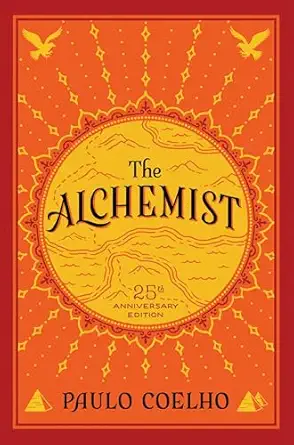
You've probably heard of it. It's sold over 150 million copies worldwide. It's been translated into more than eighty languages. People either love it or dismiss it as simple-minded fluff. I was in the second camp when I first read it at nineteen. I didn't get it. It seemed too simple, too obvious, too much like a greeting card.
Then I read it again at twenty-five. And something shifted.
Then again at thirty. And again at thirty-five. Each time, different parts spoke to me. Different lessons landed. The book grew as I grew.
Here's why this one book, this simple fable about a shepherd boy looking for treasure, has the power to change your life forever.
What the Book Is About
A shepherd boy named Santiago has a recurring dream about treasure near the Egyptian pyramids. He sells his sheep, crosses the Strait of Gibraltar, and travels across the Sahara Desert to find it.
Along the way, he's robbed, beaten, and forced to work for a year. He meets a king, a crystal merchant, an Englishman, a desert woman, and an alchemist. He falls in love. He learns to speak to the wind. He discovers that the real treasure was never where he thought it was.
That's the plot. Simple.
But what the book is really about is something else entirely.
The Lesson That Changed How I Make Decisions
When Santiago is trying to decide whether to follow his dream, an old king tells him something strange.
" When you want something, all the universe conspires in helping you to achieve it."
The first time I read that, I rolled my eyes. It sounded like wishful thinking. Like something you'd find on a motivational poster.
But Coelho isn't saying the universe will hand you what you want. He's saying something more subtle. When you truly commit to something, you start noticing things you would have missed. Opportunities appear. People show up. Coincidences happen.
I've tested this in my own life. The times I've been most focused, most clear about what I wanted, things seemed to align. Not magically. But as if my attention had tuned me into a frequency I couldn't hear before.
This changed how I make decisions. Now, when I feel uncertain about a choice, I ask myself: do I really want this? Not sort of. Not maybe. Not if it's convenient. Really.
The Lesson That Changed How I Face Hard Things
Santiago gets robbed on his first day in Africa. He has nothing. He's in a foreign country where he doesn't speak the language. He sits in the marketplace and cries.
Most of us would go home. I would have. "Well, that didn't work. Guess it wasn't meant to be."
But Santiago doesn't. He gets a job. Works for a year. Learns the language. Saves money. Then continues his journey.
Coelho writes: "The secret of life, though, is to fall seven times and to get up eight times."
This isn't about blind optimism. It's about commitment. If you really want something, setbacks are just part of the process. You don't quit because things got hard. You adjust, learn, and keep going.
I think about this when I'm tempted to give up. When a project fails. When something doesn't work out. When I feel like a fraud. The difference between people who achieve their dreams and people who don't isn't talent or luck. It's persistence. The willingness to get up one more time than you fall.
The Lesson That Changed How I Think About Fear
Near the end of the book, Santiago is in danger. He's surrounded by warriors who could kill him. He's terrified.
The alchemist tells him: "Tell your heart that the fear of suffering is worse than the suffering itself. And that no heart has ever suffered when it goes in search of its dreams."
This one hit me hard.
Most of what stops me isn't actual obstacles. It's the imagined ones. The disasters I invent in my mind. The rejection that hasn't happened yet. The pain that might never come.
I've started testing this. When I'm scared to do something, I ask myself: what's the worst that could happen? Usually, it's not that bad. And even when it is, the anticipation is worse than the reality.
The suffering we imagine is almost never as bad as the actual thing. And the actual thing, even when it hurts, comes with growth. Comes with learning. Comes with becoming someone who faced their fear and survived.
The Lesson That Changed How I See the Journey
Santiago spends months traveling. He gets robbed. He works. He crosses deserts. He faces danger. He falls in love.
By the time he reaches the pyramids, he's a different person than the shepherd who left Spain.
Then he discovers the treasure isn't there. It's back where he started. Under the tree where he first dreamed.
Some readers find this frustrating. All that journey for nothing?
But that's the point. The treasure wasn't the gold. The treasure was everything that happened along the way. The people he met. The lessons he learned. The person he became.
Coelho writes: "The journey is the thing."
I think about this when I'm focused on goals. Getting the job. Reaching the milestone. Achieving the thing. Those moments are satisfying, briefly. But the real living happens in between. The daily work. The small victories. The struggles and growth.
The destination is just an excuse for the journey.
The Lesson That Changed How I Understand Love
Santiago meets Fatima at an oasis in the desert. He falls in love instantly. Then he has to leave to continue his journey.
Fatima doesn't try to stop him. She doesn't ask him to stay. She tells him to go. Because she knows that if he stays for her, he'll eventually resent her. Their love will be built on sacrifice, not choice.
She says: "If I am really a part of your dream, you'll come back."
This is real love. Not possession. Not need. Support. Encouragement. Faith that the person you love will return to you because they choose to, not because they have to.
I've thought about this in my own relationships. The people who truly love you want you to become who you're meant to be, even if that means leaving for a while. They don't hold you back. They set you free.
The Lesson That Changed How I See What I Already Have
Santiago spends his whole journey looking for treasure at the pyramids. It never occurs to him that it might be back home.
How many of us do the same thing? Chase something we think is somewhere else, never realizing it was always here. Happiness. Peace. Fulfillment. We think they're in the next job, the next relationship, the next city. But maybe they're already here, waiting to be noticed.
The alchemist tells Santiago: "Where your treasure is, there also will be your heart."
The journey outward is really a journey inward. You travel to find yourself. And when you finally arrive, you realize you've been here all along.
I've learned to pay more attention to what's already in front of me. The people I love. The work I do. The small moments of joy that I used to rush past. The treasure was always here. I just wasn't looking.
Why This Book Changes People
The Alchemist has sold over 150 million copies. That's not an accident.
It speaks to something universal. The desire for meaning. The longing for purpose. The sense that we're here for something more than just getting by.
Coelho has said that people often tell him The Alchemist changed their life. Not because it gave them new information. Because it reminded them of something they already knew. Something buried under years of obligation and fear and practicality.
The book doesn't tell you to quit your job and follow your dream. It tells you to listen. To pay attention. To trust that the path will reveal itself as you walk it.
That's not naive. That's wisdom.
What Other People Say
Here's how actual readers describe what this book did for them.
One person writes: "This book changed my life. I was stuck in a job I hated, feeling like I'd missed my chance. Santiago's journey reminded me that it's never too late. I quit that job and started my own business. It's hard, but I'm happy for the first time in years."
Another says: "I read this book after my father died. I was lost, angry, unable to see a way forward. The idea that the journey is the thing, that the treasure is along the path, not at the end, helped me grieve. I stopped waiting to feel better and started living again."
A third writes: "I've bought this book for everyone I love. My sister, my best friend, my partner. Some of them loved it. Some of them didn't get it. But the ones who loved it, we share something now. A language for talking about dreams and fear and the universe conspiring."
Not everyone loves it. Some call it simplistic. Some say it's overhyped. That's fine. No book is for everyone.
But for the people it reaches, for the people who need its message at the right moment, it can be transformative.
How to Read This Book
If you want The Alchemist to change your life, here's what I recommend.
Don't read it once. Read it multiple times. The first time, you might miss what makes it special. Read it again in a few years. See what speaks to you then.
Read it when you're stuck. This isn't a beach read. It's a book for when you're lost, when you need direction, when you're trying to make a hard decision.
Listen to the audiobook. Jeremy Irons's narration adds a layer of warmth and wisdom that makes the story land differently. His voice feels like someone wise is talking just to you.
Take what works. You don't have to believe everything. The idea that the universe conspires to help you might not resonate. That's fine. Take the lessons that speak to you and leave the rest.
Apply it. A book can't change your life if you just read it and put it back on the shelf. The real change happens when you start making different choices. When you commit to something you really want. When you get up one more time than you fall.
The Passage I Come Back To Most
There's a section near the end that I've read dozens of times. Santiago is digging for treasure, and the wind and the sun are watching. They're having a conversation about love, about transformation, about the soul of the world.
The wind says it's not capable of turning into something else. It's always wind. The sun says it's the same. It's always sun.
But the alchemist tells Santiago that he can become something else. That humans have that gift. The ability to transform, to become more than they were, to turn their lead into gold.
That's the promise of the book. Not that you'll find treasure. That you'll become someone capable of finding it. That the journey will change you. That the person who arrives at the destination is not the same person who left.
And that person, the one you become, is the real treasure.
Final Thoughts
I've read The Alchemist five times now. Each time, different parts speak to me. Different lessons land. The book grows as I grow.
That's the mark of a great book. It's not static. It changes with you. It offers what you need when you need it.
If you've never read it, I envy you. You have that first experience ahead of you. The simplicity. The beauty. The way it sneaks up on you and stays.
If you have read it, read it again. In five years. In ten. See what it says to the person you've become.
The book will be waiting. The same words. But you'll hear something different.
That's the magic of it.
Your Turn
Has The Alchemist changed your life? What lessons stayed with you? Drop a comment and let me know.
I'm always curious what different people take away from this book.
Get your copy of The Alchemist:
Buy on Amazon | Get the Audiobook on Audiobooks (narrated by Jeremy Irons)
Disclosure: Some links in this post are affiliate links, which means I may earn a small commission if you make a purchase. This helps me keep creating content for readers like you.
i like this book
Well explained and practical